
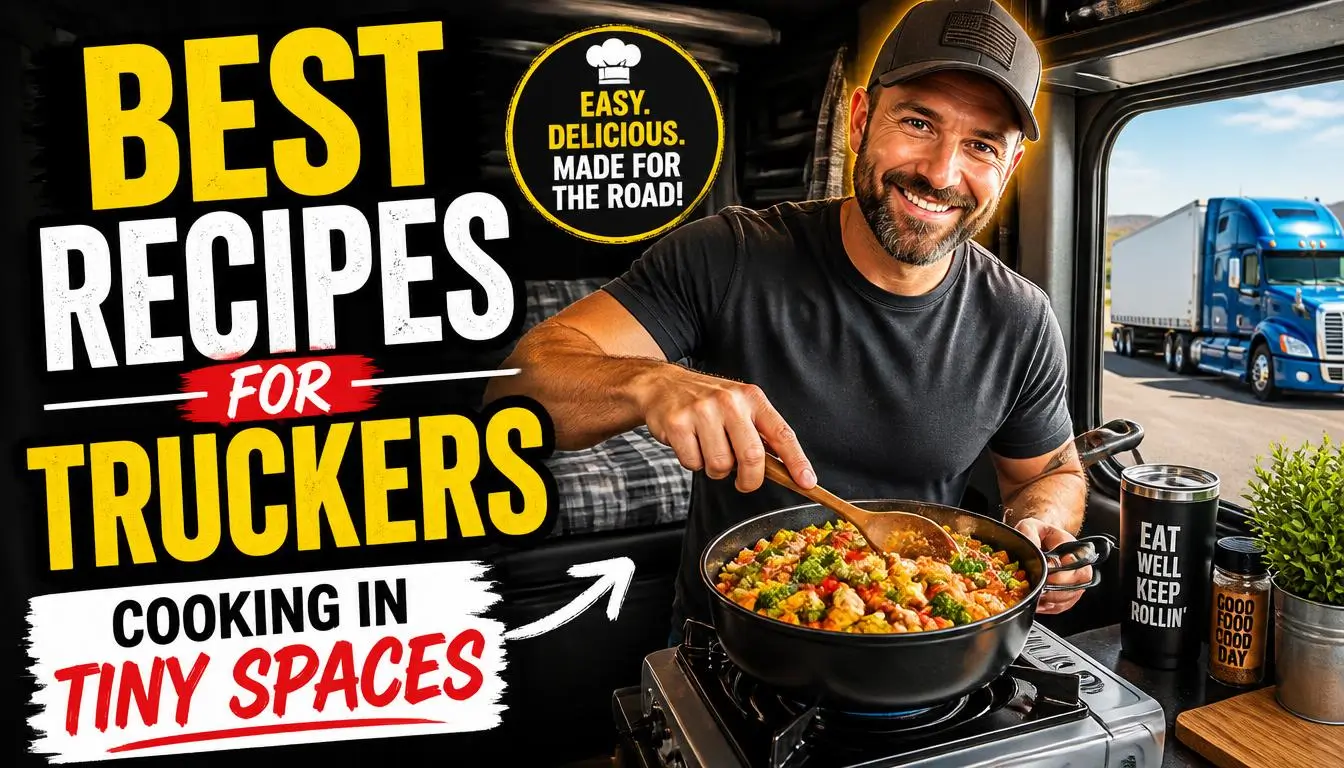
Finding the best recipes for truckers cooking in tiny spaces changed everything about my life on the road. I used to blow $40 a day on truck stop food that left me feeling sluggish and broke. Then I bought a $30 electric skillet, shoved it next to my bunk, and started cooking meals that were faster, cheaper, and honestly way better than anything under a heat lamp. If you’ve got a cab and a power inverter, you’ve got a kitchen.
1. One-Skillet Scrambled Eggs with Veggies
An electric skillet is the single most useful piece of cooking gear you can own in a truck. Toss a little butter in, crack three eggs, and throw in whatever chopped veggies you grabbed at the last grocery stop. Bell peppers, onions, and spinach are my go-to combo.
The whole thing takes about six minutes from cold skillet to plate. I keep pre-chopped veggies in a small cooler so there’s zero prep involved. Add some shredded cheese in the last minute and you’ve got a breakfast that beats any fast food drive-through by a mile. This one recipe alone probably saves me $10 a day.
2. Slow Cooker Chili (Set It and Drive)
A small Crock-Pot designed for road use, like the Lunch Crock or RoadPro 12-volt models, turns your sleeper into a legit kitchen. Brown some ground beef at your last stop, dump it into the slow cooker with a can of diced tomatoes, a can of kidney beans, chili powder, cumin, and garlic powder. Plug it in and drive.
Four hours later, you’ve got hot chili waiting for you. I usually make enough for two meals and eat the second serving the next day. A bag of shredded cheese and some tortilla chips on the side make it feel like a real sit-down dinner. The smell filling your cab while you drive is honestly one of the best parts.
3. Quesadillas on a Flat Press
If you carry a small panini press or even a flat electric griddle, quesadillas become your best friend. Lay down a tortilla, add shredded chicken from a can or a pouch, sprinkle cheese, fold it, and press for three minutes. Done.
I rotate between chicken, black bean, and just plain cheese depending on what I have on hand. A jar of salsa lives permanently in my cooler. The cleanup is almost nothing, just a quick wipe with a damp paper towel. When you’re parked at a rest stop at 9 PM and don’t want to deal with anything complicated, this is the move.
4. Instant Ramen, But Actually Good
Stop judging. Ramen is a legitimate meal when you do it right. Boil water in an electric kettle (every trucker should own one), pour it over the noodles, and then ditch half the seasoning packet because that sodium level is criminal.
Now add a soft-boiled egg you prepped earlier, some sliced green onions, and a drizzle of sriracha. If you’re feeling fancy, toss in a handful of frozen corn or peas. The whole thing costs about $1.50 and takes five minutes. I ate some version of this three nights a week during my first year on the road and never got tired of it.
5. Rice Cooker Chicken and Rice
A mini rice cooker is one of the best investments for truckers cooking in tiny spaces because it does way more than just rice. Put in a cup of rice, a cup and a half of chicken broth, and a seasoned chicken thigh right on top. Close the lid and hit the button.
Twenty minutes later you have perfectly cooked rice with tender chicken sitting on top. Season the chicken with whatever you like. I use a pre-mixed lemon pepper seasoning from McCormick because it’s easy and tastes great. The Dash Mini Rice Cooker fits in a cabinet above the bunk without taking up much room at all.
6. Microwave Baked Potato Bar
Most newer trucks have enough power for a small microwave, and if yours does, baked potatoes are criminally underrated. Wash a russet potato, poke it with a fork a few times, wrap it in a damp paper towel, and microwave for about 8 minutes, flipping halfway through.
Then load it up. Canned chili, shredded cheese, sour cream, butter, bacon bits from a jar. You can make a completely different potato every night of the week just by changing the toppings. It’s filling, it’s cheap, and the potato itself costs like 60 cents. I genuinely look forward to potato nights.
7. No-Cook Wraps for Hot Days
Sometimes you don’t want to cook at all, and that’s fine. Grab a large flour tortilla, spread on some hummus or cream cheese, layer deli turkey or ham, add lettuce, tomato, and a slice of cheese. Roll it tight and eat it cold.
These saved me during summer runs through Texas and Arizona when turning on any appliance made the cab feel like a sauna. I prep two or three at a time, wrap them in foil, and keep them in the cooler. They hold up for a solid 24 hours without getting soggy. Sometimes the best recipe is the one that doesn’t require electricity.
8. Skillet Sausage and Peppers
Pick up a pack of pre-cooked smoked sausage, like Hillshire Farm or Eckrich, and slice it into coins. Throw it in your electric skillet with sliced bell peppers and onions. Cook for about 10 minutes until everything gets a little caramelized.
You can eat this straight out of the skillet, stuff it into a hoagie roll, or pile it on top of instant rice. The sausage is already cooked, so you’re really just heating and browning. The whole meal comes together fast and packs serious flavor. I keep a pack of sausage in my cooler at all times because it lasts a while and works in almost anything.
9. Overnight Oats (Zero Cooking Required)
Before you go to sleep, dump half a cup of rolled oats into a jar or container. Add half a cup of milk, a spoonful of peanut butter, a drizzle of honey, and some sliced banana. Stir it up, seal it, and put it in your cooler overnight.
Wake up, grab the jar, and breakfast is already done. No heat, no cleanup, no waiting. I rotate between peanut butter banana, mixed berry with yogurt, and apple cinnamon depending on my mood. A bag of oats costs about $3 and gives you breakfast for an entire week. Hard to beat that math.
10. Hot Dog Upgrades in the Electric Kettle
Yes, you can cook hot dogs in an electric kettle, and before you laugh, hear me out. Drop two hot dogs in, fill with water, boil for about five minutes, and you’ve got perfectly cooked dogs. Drain the water and toss the kettle right back on the shelf.
The upgrade part matters, though. Get good buns, add sauerkraut from a small jar, spicy mustard, and diced onions. Suddenly you’re eating a street-style dog that would cost $6 at a food truck. This is the kind of simple, no-mess cooking that makes the road feel a little more like home. It’s one of those best recipes for truckers cooking in tiny spaces that sounds silly until you try it.
Essential Gear That Actually Fits in a Truck Cab
You don’t need a full kitchen setup. These are the items I actually use and that actually fit without taking over your living space.
- Electric skillet (12-inch max, like the Presto 06620)
- Mini rice cooker (Dash Mini is perfect)
- Electric kettle (1-liter size)
- 12-volt slow cooker or Lunch Crock
- Small cutting board and one sharp knife
- Collapsible colander
- A decent cooler or 12-volt fridge if your budget allows
The 12-volt fridge was my biggest single upgrade. I bought a BougeRV 23-quart model and it completely replaced my cooler. No more melted ice, no more soggy food. Worth every penny.
Frequently Asked Questions
What cooking appliances work best in a semi truck?
An electric skillet, mini rice cooker, electric kettle, and 12-volt slow cooker cover about 90% of what you’d ever want to cook. Pair them with a decent power inverter (at least 1500 watts) and you can run any of these without issues. Start with the skillet and kettle if your budget is tight.
How do truckers keep food fresh without a regular fridge?
A quality 12-volt portable fridge like the BougeRV or Alpicool runs off your truck’s battery and keeps food cold for days. If that’s out of your price range, a good insulated cooler with block ice (not cubed) will hold temperature for 2 to 3 days. Freeze water bottles as backup ice that doubles as cold drinks.
Are there good recipes for truckers cooking in tiny spaces with no microwave?
Absolutely. An electric skillet and kettle handle almost everything a microwave does. Scrambled eggs, quesadillas, sausage and peppers, and even ramen all cook perfectly with just those two tools. Overnight oats and cold wraps require no appliance at all. You really don’t need a microwave to eat well on the road.
How much money can you save cooking in your truck?
I tracked my spending for a full month after switching from truck stops to cooking in my cab. I went from roughly $1,200 a month on food to about $350. That’s over $800 in savings. Your numbers will vary depending on what you buy, but even basic cooking cuts your food budget in half easily.
What foods last the longest in a truck without refrigeration?
Canned beans, canned chicken, tortillas, peanut butter, oats, rice, dry pasta, seasoning packets, and shelf-stable sausage all last a long time without cold storage. Potatoes and onions hold up for a week or more at cab temperature. Build your meal rotation around these staples and you’ll always have something to cook.
Conclusion
Eating well on the road doesn’t require a fancy setup or culinary training. A couple of small appliances, a cooler full of basics, and a willingness to try a few simple meals will save you serious money and keep you feeling a whole lot better behind the wheel. What’s the first recipe you’re going to try in your cab?