
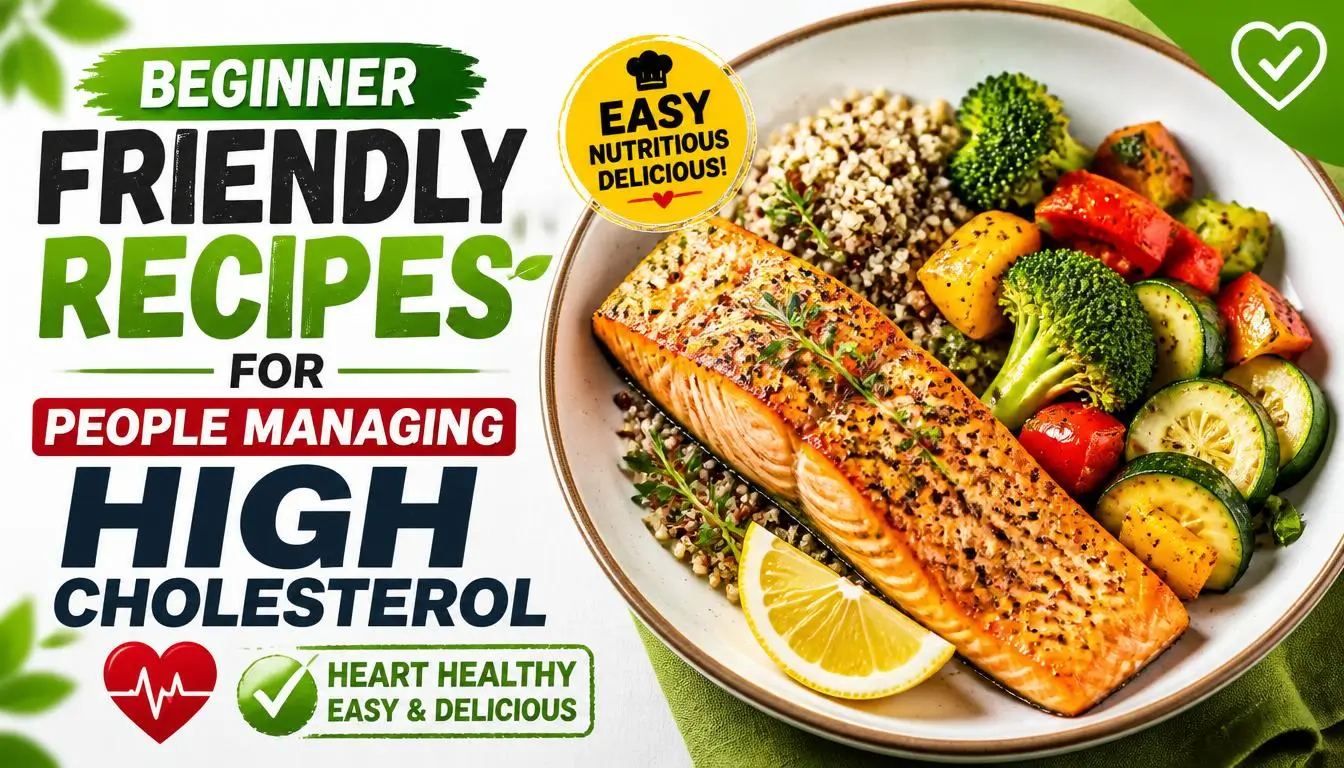
When I first started hunting for beginner friendly recipes for people managing high cholesterol, everything I found tasted like cardboard dressed up with good intentions. My doctor had just handed me a lab report that made my stomach drop, and suddenly my entire relationship with food felt complicated. But here’s the thing: I figured it out. Not with fancy ingredients or hours in the kitchen, but with simple, genuinely satisfying meals I now cook on repeat.
Why Cholesterol-Friendly Cooking Doesn’t Have to Be Miserable
The biggest myth I bought into was that eating for better cholesterol meant giving up flavor. I spent the first two weeks eating plain grilled chicken and steamed broccoli, and I was ready to quit. Then I started actually researching what drives cholesterol up (saturated fat, trans fat, excess sugar) versus what brings it down (soluble fiber, healthy fats, omega-3s). That shift changed everything.
Once you know the “why,” the cooking part gets way easier. You stop avoiding entire food groups out of fear and start making intentional swaps. Butter becomes olive oil. White rice becomes quinoa. Heavy cream becomes cashew cream. None of these swaps require culinary school. They just require a grocery list and about 30 minutes.
1. One-Pan Lemon Herb Salmon with Roasted Vegetables
Salmon is one of the most cholesterol-friendly proteins you can eat, packed with omega-3 fatty acids that actively help lower triglycerides. I buy frozen wild-caught fillets from Costco because they’re affordable and thaw in about 20 minutes under cold water.
Toss broccoli, bell peppers, and red onion on a sheet pan with a drizzle of extra virgin olive oil, salt, pepper, and garlic powder. Nestle the salmon fillets in between, squeeze fresh lemon on top, and roast at 400°F for about 18 minutes. The cleanup is one pan, one cutting board, one knife. I make this at least twice a month, and it never gets old.
2. Overnight Oats with Chia Seeds and Berries
Oats are loaded with soluble fiber, the specific type that binds to cholesterol in your digestive system and helps flush it out. I was never a breakfast person until I started making overnight oats because there’s literally zero morning effort involved.
Before bed, mix half a cup of rolled oats with a tablespoon of chia seeds, a cup of unsweetened almond milk, and a small drizzle of honey. In the morning, top with fresh blueberries or sliced strawberries and a handful of walnuts. The whole jar costs about $1.50 and keeps me full until lunch. I rotate toppings weekly so it never feels repetitive.
3. Black Bean and Sweet Potato Tacos
These tacos became a weeknight staple in my house within the first month of changing my diet. Black beans deliver a huge amount of soluble fiber, and sweet potatoes add natural sweetness without any added sugar. Plus, the whole meal is ready in under 25 minutes.
Dice a large sweet potato into small cubes, toss with olive oil and cumin, and roast at 425°F for 20 minutes. While that’s going, warm a can of black beans with a pinch of chili powder, garlic, and lime juice. Load everything into corn tortillas (lower in fat than flour) and top with diced avocado and fresh cilantro. My non-diet-following partner requests these regularly, which tells you everything about how they taste.
4. Mediterranean Chickpea Salad
I used to think salads were punishment. This one changed my mind because it’s hearty enough to feel like an actual meal. Chickpeas are another fiber powerhouse, and the Mediterranean flavor profile keeps everything bright and interesting.
Drain and rinse a can of chickpeas. Toss them with diced cucumber, cherry tomatoes, red onion, Kalamata olives, and crumbled feta (just a small amount, feta is lower in saturated fat than cheddar). Dress with olive oil, red wine vinegar, dried oregano, salt, and pepper. This keeps in the fridge for three days, which makes it perfect for meal prep. I bring it to work in a mason jar at least once a week.
5. Turkey and Vegetable Stir-Fry with Brown Rice
Ground turkey is leaner than ground beef, and when you season it right, you genuinely won’t miss the difference. I use 93% lean ground turkey from my local grocery store, and it’s usually a dollar or two cheaper per pound than beef anyway.
Brown the turkey in a large skillet with a teaspoon of sesame oil, minced garlic, and fresh ginger. Add sliced zucchini, snap peas, shredded carrots, and a splash of low-sodium soy sauce. Serve over brown rice (more fiber than white) and top with a sprinkle of sesame seeds. The entire thing takes about 20 minutes from fridge to plate. This recipe single-handedly saved me from ordering takeout on busy weeknights.
6. Baked Oatmeal Cups for Grab-and-Go Mornings
Some mornings I have exactly zero patience for cooking, and that used to mean grabbing a pastry or skipping breakfast entirely. These baked oatmeal cups solved that problem. I make a batch on Sunday, and they last the whole workweek.
Mix two cups of rolled oats with a mashed banana, two eggs, a cup of unsweetened applesauce, a teaspoon of cinnamon, and a half cup of walnuts. Pour into a greased muffin tin and bake at 350°F for 22 minutes. Each cup has about 3 grams of soluble fiber and enough protein to keep hunger away for hours. I store them in the fridge and microwave one for 30 seconds each morning. They taste like banana bread, honestly.
7. Simple Lentil Soup
Lentils are ridiculously underrated. They cook faster than most dried beans, they’re dirt cheap, and a single cup of cooked lentils delivers around 15 grams of fiber. I make a big pot of this soup every couple of weeks and freeze individual portions.
Sauté diced onion, carrots, and celery in olive oil for about five minutes. Add minced garlic, a teaspoon of cumin, and a pinch of smoked paprika. Pour in a cup of dried green or brown lentils with four cups of low-sodium vegetable broth. Simmer for 25 minutes until the lentils are tender. Finish with a squeeze of lemon juice, it makes a bigger difference than you’d expect. This is the kind of beginner friendly recipe for people managing high cholesterol that feels like comfort food without any of the guilt.
8. Avocado Toast with Everything Bagel Seasoning
Yes, the internet’s favorite food is actually great for cholesterol. Avocados contain monounsaturated fats that can help lower LDL (the “bad” cholesterol) when you use them to replace saturated fats. The trick is pairing them with the right bread.
Use whole grain bread (look for brands like Dave’s Killer Bread or Ezekiel, both high in fiber). Toast it, mash half a ripe avocado on top, sprinkle with Everything Bagel seasoning from Trader Joe’s, and add a pinch of red pepper flakes if you like a little heat. Top with sliced cherry tomatoes for extra nutrients. The whole thing takes about four minutes. I eat this for lunch at least three times a week, and it never feels like “diet food.”
Building Your Cholesterol-Friendly Grocery List
Having the right staples on hand makes beginner friendly recipes for people managing high cholesterol feel effortless rather than stressful. Here’s what I always keep stocked:
- Rolled oats and chia seeds
- Canned black beans, chickpeas, and lentils
- Frozen wild-caught salmon fillets
- Extra virgin olive oil (my go-to is California Olive Ranch)
- Fresh garlic, lemons, and avocados
- Whole grain bread and corn tortillas
- Low-sodium broth and canned tomatoes
- Walnuts, almonds, and ground flaxseed
When your pantry is set up this way, you can throw together any recipe on this list without a special trip to the store. That convenience is what made the biggest difference for me in actually sticking with the changes long-term.
FAQs
What makes a recipe cholesterol-friendly for beginners?
A cholesterol-friendly recipe limits saturated fat, avoids trans fat, and emphasizes ingredients high in soluble fiber and healthy fats. For beginners, it also needs to be simple with minimal ingredients and short cook times. Most of the recipes above use fewer than 10 ingredients and take under 30 minutes to prepare.
Can I eat eggs if I have high cholesterol?
Recent research shows dietary cholesterol from eggs has less impact on blood cholesterol than saturated fat does. Most cardiologists now say one egg per day is fine for most people. I still eat eggs several times a week but focus more on reducing butter, full-fat cheese, and processed meats.
Are beginner friendly recipes for people managing high cholesterol actually filling?
Absolutely. The key is building meals around fiber and healthy fats, both of which keep you satisfied for hours. Meals like lentil soup, black bean tacos, and salmon with roasted vegetables are genuinely filling. I was surprised how rarely I felt hungry once I started eating this way consistently.
How quickly can diet changes affect cholesterol levels?
Most doctors say you can see measurable changes in your cholesterol numbers within 8 to 12 weeks of consistent dietary changes. My own LDL dropped 22 points in about three months after switching to these types of meals. Pairing diet changes with regular exercise tends to speed up results.
Do I need to cut out all red meat?
You don’t have to eliminate red meat entirely, but cutting back helps. I switched from eating beef four or five times a week to maybe once, and I replaced it with salmon, turkey, and plant-based proteins like lentils and chickpeas. That single swap made a noticeable difference in my numbers at my next checkup.
Is olive oil actually better than butter for cholesterol?
Yes. Olive oil is rich in monounsaturated fats that can help lower LDL cholesterol, while butter is high in saturated fat that raises it. I swapped butter for extra virgin olive oil in almost all my cooking, and it was one of the easiest adjustments I made. The flavor works in everything from roasted vegetables to pasta.
Conclusion
Managing cholesterol through food doesn’t require you to become a chef or eat things you hate. These are the actual meals I rotate through every week, and my last lab results proved they work. What’s a recipe you’ve been leaning on since changing your diet?